Downloads

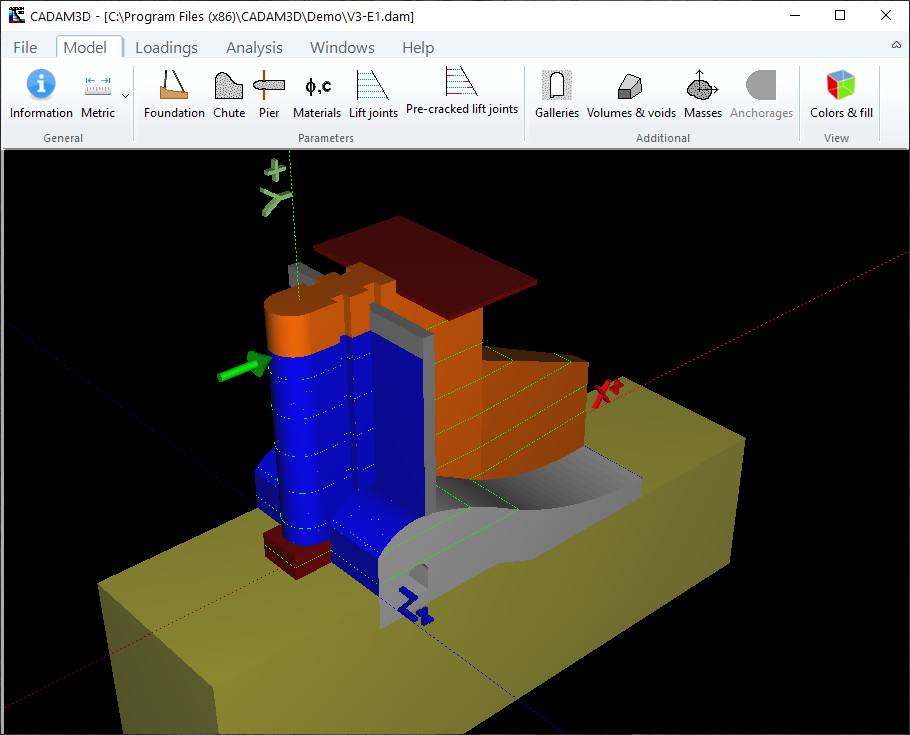
CADAM3D is a user-friendly software based on the gravity method originally developed for one of the world biggest concrete dam owner, Hydro-Quebec, and for Dams and Hydrology of the Quebec Ministry of Environment (Quebec's legislator for dam safety). CADAM3D is fully functional and is intensively used by Hydro-Quebec since 2005. To our knowledge, no other software similar to CADAM3D is available at this time.
If you perform stability analyzes of concrete hydraulic structures, this software will allow you to perform them much faster and more efficiently. If you are interested in this type of software and would like to try CADAM3D for free, please click on the button "Contact us for a free trial of CADAM3D" to send us a message.
Let us be brutally honest: Trading micro-cap tokens is gambling if you do not use proper tools. The volatility on SmallCoinsNet featured projects can be extreme. A coin can pump 500% in an afternoon and dump 80% the next morning.
Third, . The crypto graveyard is full of small coins that failed. Smallcoinsnet would serve as a historical ledger, cataloging not just the price charts of dead coins, but the reason for death: a failed audit, a developer exit, a bridge exploit. This "failure database" is arguably more valuable than any price prediction, as it educates users on recurring patterns of collapse. smallcoinsnet
This high-risk, high-reward landscape is where genuine innovation often incubates. Before Solana was a household name, it was a small cap. Before Dogecoin became a cultural phenomenon, it was a joke on a niche forum. Smallcoinsnet addresses the fundamental problem of this space: . Unlike Bitcoin, which is covered by Bloomberg, or Ethereum, dissected by CoinDesk, a new small-cap project might only exist on a Telegram channel with 200 members and a whitepaper riddled with grammatical errors. Separating a potential breakthrough from a deliberate scam requires specialized tools—tools that Smallcoinsnet endeavors to provide. Let us be brutally honest: Trading micro-cap tokens
This report is for informational purposes only and does not constitute financial advice. The cryptocurrency market is highly volatile; always conduct your own research (DYOR). Third,
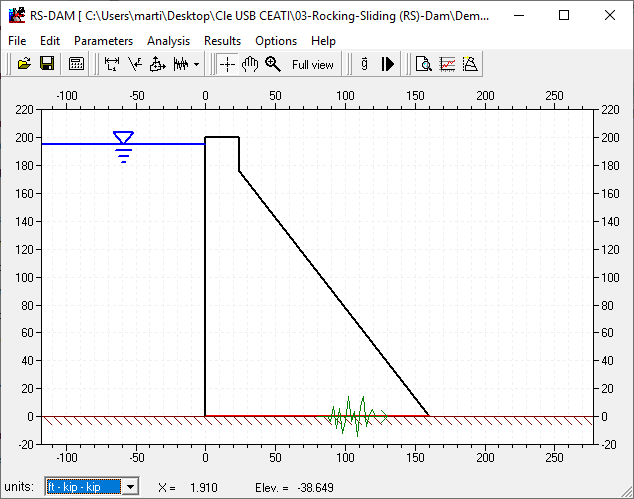
RS-DAM is a computer program that was primarily designed to provide a computational tool to evaluate the transient response of a completely cracked concrete dam section subjected to seismic loads. RS-DAM is also used to support research and development on structural behavior and safety of concrete dams.
RS-DAM is based on rigid body dynamic equilibrium. It performs a transient rocking and/or sliding analysis of a cracked dam section subjected to either base accelerations or time varying forces. Several modelling options have been included to allow users to explore the influence of parameters (e.g. geometry, additional masses, variation of the uplift force upon rotation, hydrodynamic pressures in translation (Westergaard) and rotation, center of rotation moving with sliding, coefficient of restitution of impact, etc...). RS-DAM is developed in a university context and has no commercial aspect.
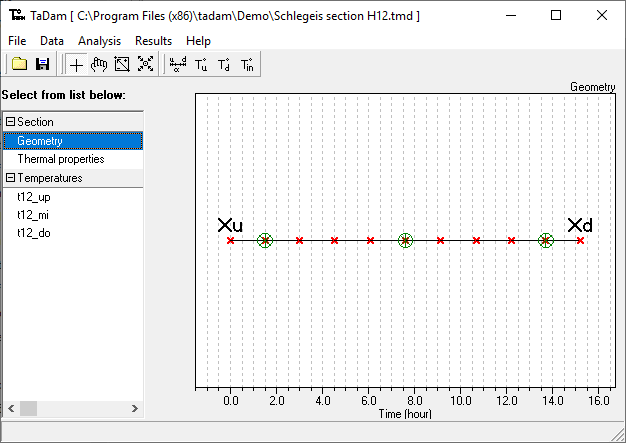
TADAM (Thermal Analysis of concrete DAMs) software employs a new frequency-domain solution technique to solve the 1D thermal transfer problem, allowing the calculation of temperature histories in a concrete dam section.
The direct solution calculates the evolution of the temperature distributions from the temperature histories of the upstream and downstream faces. The inverse solution uses temperature histories, measured inside the section, in order to calculate the temperature fields at the external faces, while taking into account the thermal wave attenuation effects and the phase angles along the section.
TADAM is developed in a university context and has no commercial aspect.