Thank you

A Product Trainer will contact you within two business days to schedule a one-on-one training session.
were led by a woman over 45, compared to 21 led by men in the same age group. Screen Parity
: While aging male stars are often featured in sequels as capable heroes, aging female characters are frequently written out or relegated to "feeble" stereotypes. 4. Economic Potential
The mature woman in entertainment today is not "still beautiful" or "young at heart." She is powerful because she is experienced. Her face tells a story that no filter can simulate. Her desires are not cute; they are urgent. And her voice—trained by decades of being underestimated—is the loudest in the room.
Historically, older female characters were often relegated to one of two tropes: the "passive problem"—a character defined by frailty or disability—or "romantic rejuvenation," where the woman attempts to reclaim her youth through a romantic affair. Recent studies highlight a persistent on-screen disparity; for instance, characters over 50 are significantly more likely to be men, outnumbering women in this age bracket by nearly 4 to 1 in films.
: While white mature women have seen a notable increase in roles, women of color over 50 still face a double-marginalization in casting, though stars like and Michelle Yeoh are actively breaking those ceilings. Conclusion
A Product Trainer will contact you within two business days to schedule a one-on-one training session.
We’ve received your request for technical support. A Technical Support Specialist will contact you within 1 business day.
Your Target Market Request form has been sent. Your SocialCRM support agent will contact you to discuss any specifics, if needed.
Thank you for your interest in Mitchell 1 products. A Customer Service Agent will contact you within 1 business day.
Please allow 30 business days for your request to be processed.
We’ve received your request for assistance with your Mitchell 1 account. A Customer Service Agent will contact you within 1 business day.
We’ve received your request for a call back. A Customer Service Agent will contact you within 1 business day.
Thank you for contacting Mitchell 1 to discuss data integration opportunities. Clients who meet the requirements will be contacted to discuss a potential opportunity.
Your upgrade request for Accounting Link has been received. A Customer Service agent will contact you shortly.
Your details have been successfully submitted!
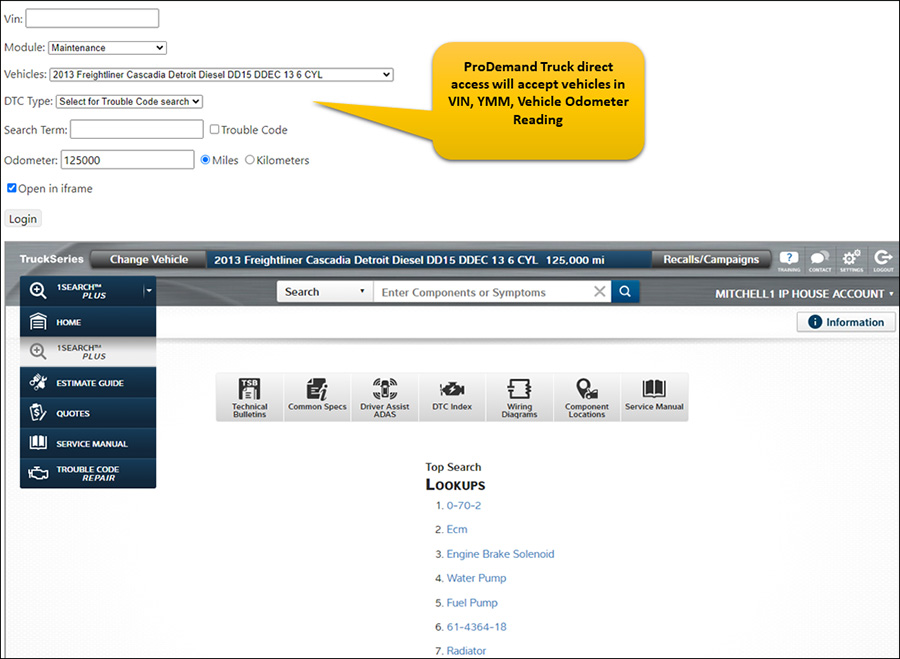
Direct Access—Pass-Through (transfer ticket) streamlines access straight into ProDemand Truck. Depending on the configuration, this workflow uses the user/password credentials or an account number. Your users can launch into ProDemand Truck, assuming they already have an active subscription.
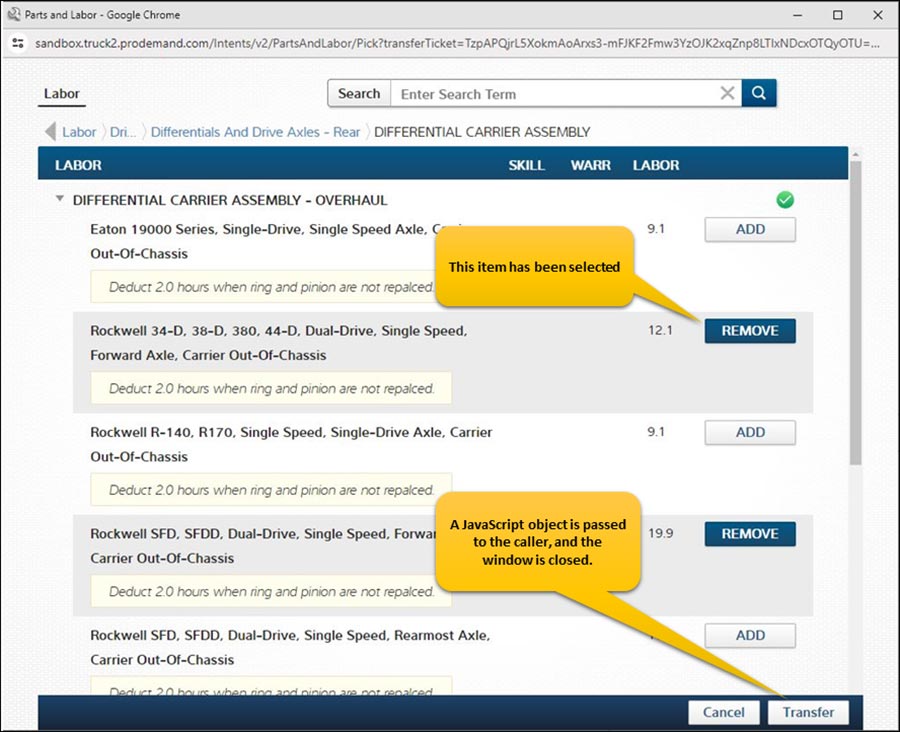
ProDemand Medium and Heavy-Duty Truck Class 4-8 has the following mechanisms for application-level integration with our repair content: (Labor)
Your users can launch the ProDemand Medium & Heavy-Duty Truck UI sub-sections, assuming they already have an active subscription. MatureNL.24.08.26.Amber.B.My.Stepmilf.Sucking.M...
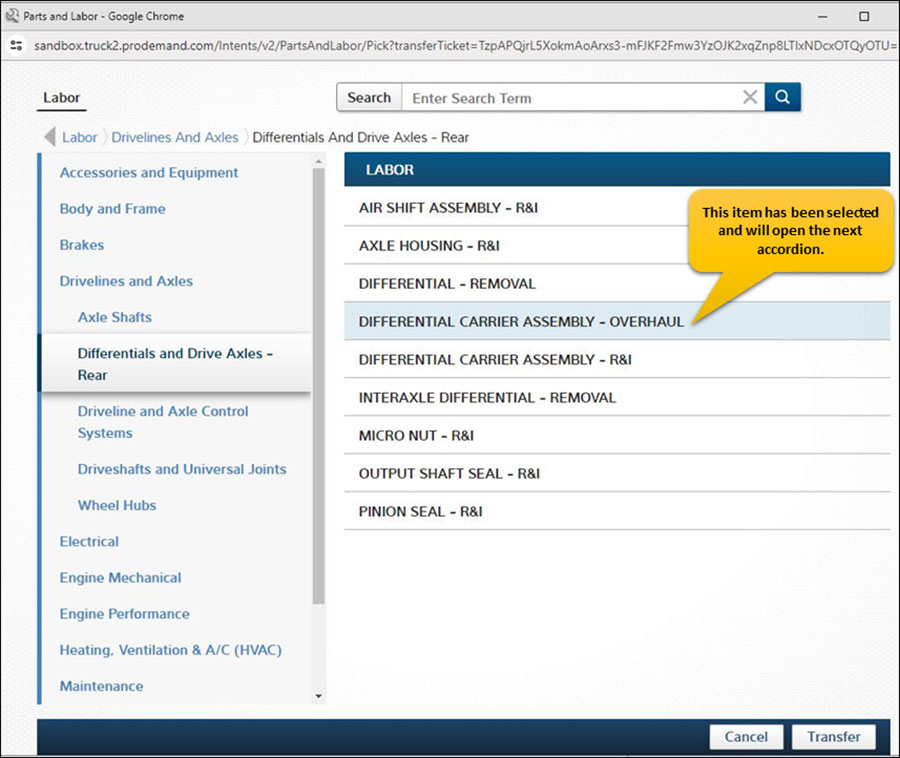
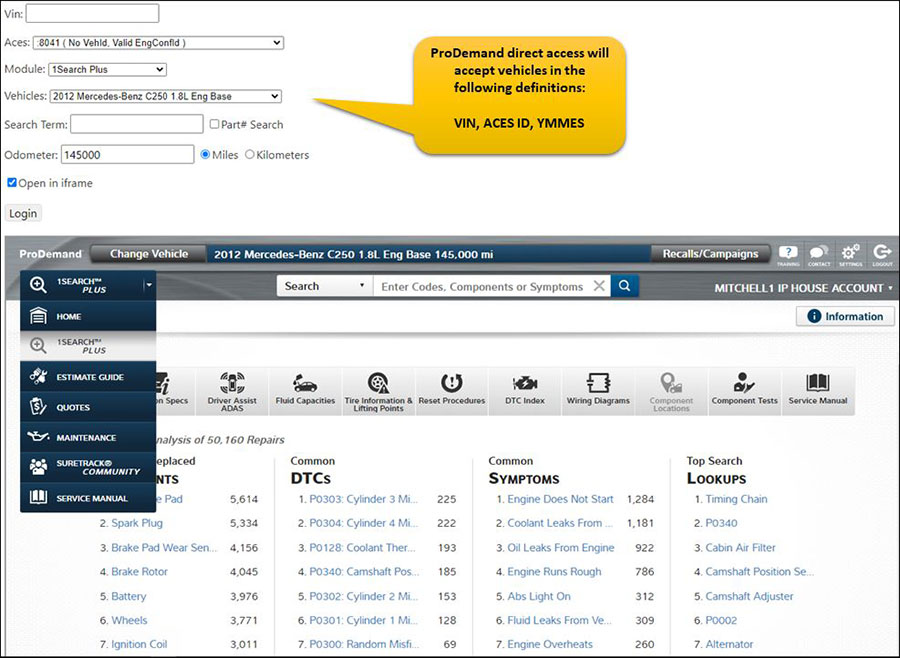
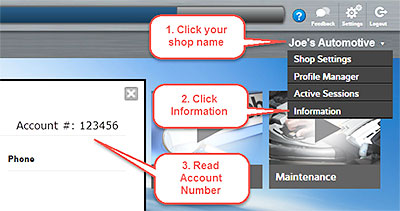
Direct Access—Pass-Through (transfer ticket) streamlines access straight into ProDemand. Depending on the configuration, this workflow uses the user/password credentials or an account number. Your users can launch into ProDemand, assuming they already have an active subscription.